Looking for the latest information on Cp19 Taylor Series Python Code? We've gathered comprehensive data, records, and insights about Cp19 Taylor Series Python Code.
Main Features
Explore the key sources for Cp19 Taylor Series Python Code.
History
Stay updated on Cp19 Taylor Series Python Code's latest milestones.
Part 1/2 Exploring Taylor Series Expansion - Theory and Python Implementation
14. Python-Taylor Series
Understand the Taylor Series (with Error Analysis) | Learn Numerical Analysis with Python
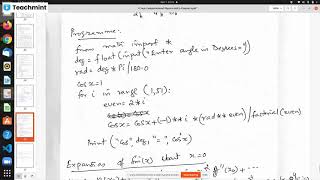
Taylor Series Expansion| Python code for Taylor Series| Mathematics Lab |How to write python code
Taylor Series in 4 Minutes (Why 1 - p ≈ e⁻ᵖ)
Gaussian Distribution Taylor series approximation
11.10 *BONUS* Approximating Pi using Taylor Series
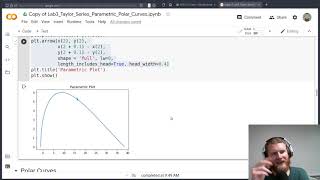
Lab 3: Taylor Series and Parametric/Polar Coordinates
Intro to Taylor Series: Approximations on Steroids
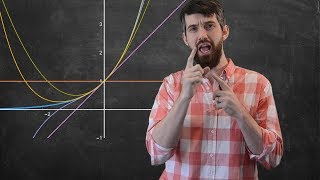
Taylor series | Chapter 11, Essence of calculus
Python Exercise 4
Detailed Analysis
Data is compiled from public records and verified media reports.
Last Updated: October 31, 2026
Summary
For 2026, Cp19 Taylor Series Python Code remains one of the most talked-about information profiles. Check back for the newest reports.
Disclaimer: Disclaimer: All information is compiled from publicly available data, media reports, and analysis. Actual details may vary.
Summary
PH6B13(E1): Computational Physics for BSc VI sem Physics students. In this video we will be talking about one very important concept which is the In this Tutorial, we will discuss the Welcome to this video in this video we will discuss Welcome to a two-part tutorial series on Thank you for watching my online class.Know more about me and my classes from this website: ... This Video shows how to implement "1 - p is about e to the -p." It looks weird, but it's how the Poisson distribution gets its e^(-lambda), and it shows up everywhere in ... In this video, we go over finding a power In this lab, we'll investigate intervals of convergence for While in Calc I we used Linear Approximations, can we approximate functions by quadratics, cubics, etc? Indeed,