Looking for the latest information on Graph Based Slam And Loop Closure? We've compiled comprehensive data, records, and insights about Graph Based Slam And Loop Closure.
Key Details
Explore the primary sources for Graph Based Slam And Loop Closure.
Latest News
Stay updated on Graph Based Slam And Loop Closure's latest milestones.
Lec-10: Graph-Based SLAM (English)
Optimized Graph-based SLAM
Graph SLAM - Artificial Intelligence for Robotics
Have I been here before Learning to Close the Loop with LiDAR Data in Graph-Based SLAM
SLAM - Graph-based SLAM with Gauss-Newton Optimization - FR Campus, 2009-2010
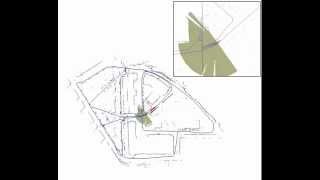
SLAM - Graph-based SLAM with Node Reduction - Freiburg79, 2011
EGH404 Research Proposal - Practical teaching of Graph based SLAM
An implementation of Visual Graph-Based SLAM
[Matlab] Conventional EKF SLAM Loop Closing
Graph SLAM Demonstration
Graph based SLAM
Detailed Analysis
Data is compiled from public records and verified media reports.
Last Updated: October 31, 2026
Summary
For 2026, Graph Based Slam And Loop Closure remains one of the most searched-for information profiles. Check back for the latest updates.
Disclaimer: Disclaimer: All information is compiled from publicly available data, media reports, and analysis. Actual details may vary.
Summary
Filtering methods the Extended Kalman Filter fail due to quadratic complexity in state size. This video provides some intuition around Pose Shows introductory material relating to solving the Simultaneous Localization and Mapping ( This video is part of an online course, Intro to Artificial Intelligence. the course here: ... Supporting video for the public repository of ROS package cmr_lidarloop ( github.com/MarvinStuede/cmr_lidarloop) 2021, ... Giorgio Grisetti, Rainer Kuemmerle, Cyrill Stachniss, and Wolfram Burgard A Tutorial on Henrik Kretzschmar and Cyrill Stachniss Information-Theoretic Compression of Pose This is my research proposal video for the QUT Unit EGH404. This is an (offline) implementation of the The video shows the creation and on the fly improvement of a map using our new