Introduction to Logical Operators Implication Part 1
Looking for the latest information on Logical Operators Implication Part 1? We've gathered comprehensive data, records, and insights about Logical Operators Implication Part 1.
Key Details
Explore the primary sources for Logical Operators Implication Part 1.
Latest News
Stay updated on Logical Operators Implication Part 1's latest milestones.
Explanation of Implication
Implication and 16 logical operations | Math Foundations 258 | N J Wildberger
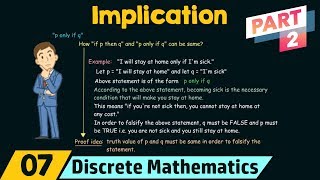
Logical Operators − Implication (Part 2)
Logical Operators − Implication (Part 3)
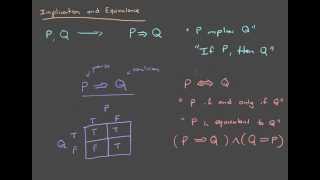
Propositional Logic 4: Implication and Equivalence
Logical Operators and Truth Tables - Lecture 1 (Logic)
Conditional and biconditional statements|Questions|truth tables|BBA Maths|BCA Maths
Rules of Implication (part 1)
Lecture 1 (Logic) Logical Operators and Truth Tables
Implications Converse, Inverse, Contrapositive, and Biconditionals (1.1.2)
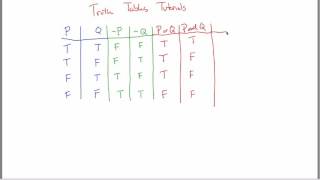
Truth Tables Tutorial (part 1)
Deep Dive
Data is compiled from public records and verified media reports.
Last Updated: October 31, 2026
Conclusion
For 2026, Logical Operators Implication Part 1 remains one of the most talked-about information profiles. Check back for the latest updates.
Disclaimer: Disclaimer: All information is compiled from publicly available data, media reports, and analysis. Actual details may vary.
Summary
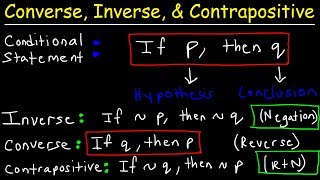
This geometry video tutorial explains how to write the converse, inverse, and contrapositive of a conditional statement - if p, then q. This video kick-starts the discrete mathematics course. Explained in this video are the topics in propositional Given two binary inputs p and q, there are four possible assignments of 0's and1's to them, and correspondingly 16 different ... We talk about statements of the form "If P, then Q" Full Playlist: youtube.com/playlist?list=PLJWhXkxQzDF6O0SrA-uAO-dy4SWQBQmq7 __________VIDEO ... Conditional and biconditional statements|Questions|truth tables|BBA Maths|BCA Maths Instagram:- Instagram.com/dreammath Hello ... This brief video explains four simple valid deductive argument forms that can be used as rules of inference for proving the validity ... There's now 4 parts to the tutorial with two extra example videos at the end. Hope this helps!