Looking for the latest information on Mips Assembly Language Part2? We've researched comprehensive data, records, and insights about Mips Assembly Language Part2.
Main Features
Explore the primary sources for Mips Assembly Language Part2.
Developments
Stay updated on Mips Assembly Language Part2's latest milestones.
ISA 2.2 MIPS Instruction Encodings
6 MIPS Assembly Tutorial Part2
CS47: Lecture 10, Part 2 (MIPS Assembly Language)
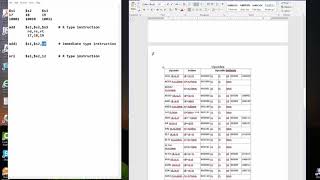
Translating MIPS Assembly to Machine Code - part 2
Loops & Arrays in MIPS Assembly Lanuage Programming
MIPS Assembly Language – Chapter 2 Explained | Computer Organization
MIPS Tutorial 14 Dividing Integers part 2
Mips Assembly #2 - Data Types (Word, Float, Double)
MIPS Translation Part 2
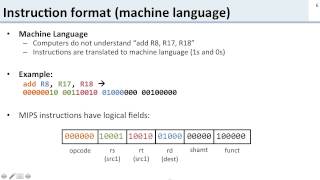
MIPS Assembly - part 2: Instruction formats
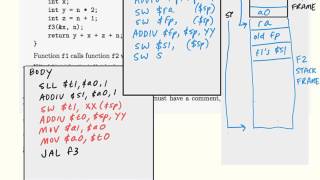
Writing basic C or C++ program in MIPS Assembly (Part 2)
Detailed Analysis
Data is compiled from public records and verified media reports.
Last Updated: October 31, 2026
Future Outlook
For 2026, Mips Assembly Language Part2 remains one of the most searched-for information profiles. Check back for the latest updates.
Disclaimer: Disclaimer: All information is compiled from publicly available data, media reports, and analysis. Actual details may vary.
Summary
In this tutorial we solve question number 4 and 5 shown in the Writing Microprocessor without Interlocked Pipelined Stages. MIPS32 Instruction Set Architecture (ISA) So now the next one we are going to look at is a little bit down these chapters the How to translate assembly code to Please support me on Patreon: patreon.com/thesimpleengineer twitter.com/thesimpengineer ... In this lecture, we dive into one of the most important topics in Computer Organization: 👉 The Language of the Computer – MIPS ... Learn how to divide integers in Today we'll talk about the most common data types other than ascii in Finishing the Prologue, calculating the size and location of the stack frame, updating the stores to the stack with the correct offsets. In this continuation I show how a similar program would work using local variables instead of static variables. Watch part 1 first if ...