Looking for the latest information on Non Orientable Surfaces? We've gathered comprehensive data, records, and insights about Non Orientable Surfaces.
Core Information
Explore the key sources for Non Orientable Surfaces.
History
Stay updated on Non Orientable Surfaces's newest achievements.
This open problem taught me what topology is
Lesson 5: Surfaces - More Invariants
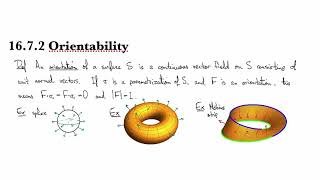
16.7.2 Orientability
The Möbius Strip: Non-Orientability Explained
The nonorientable 4-genus of knots - Charles Livingston
Non-Orientable Surfaces
The Möbius Strip: Infinite Loops & Non-Orientability Explained
What is Non Orientable
Véronique Bazier-Matte: Categorification of non-orientable surfaces
Non-orientability
L. Liechti - Minimal dilatations on nonorientable surfaces
Full Guide
Data is compiled from public records and verified media reports.
Last Updated: October 29, 2026
Future Outlook
For 2026, Non Orientable Surfaces remains one of the most searched-for information profiles. Check back for the latest updates.
Disclaimer: Disclaimer: All information is compiled from publicly available data, media reports, and analysis. Actual details may vary.
Summary
For the classes of Atul Roy A video to show the calculations (with a much simpler equation for the mobius strip) is at ... Taken from Visual Calculus by Zine Boudhraa amazon.com/dp/B06XW4M1GH. ... topology.nipissingu.ca/tp/reprints/v06/tp06107.pdf The on-screen argument for why all closed In this video, we talk about topological invariants such as boundary number and genus. Also covered are the concepts of ... Discover the topological paradox of the Möbius strip, a compact two-dimensional manifold with boundary defined by the quotient ... ... The nonorientable 4-genus of a knot is the minimum first betti number of a One Side, One Edge, Infinite Possibilities. Most of us know the Möbius strip as a cool paper trick—give a strip a twist, tape it, and ... Abstract: Quasi-cluster algebras were defined in 2015 by Dupont and Palesi and are an analogous to cluster algebras for ... Demonstration of what it means to be We discuss the problem of finding the minimal dilatation among pseudo-Anosov mapping classes on a fixed closed